
Recycling Displays & Print
SUSTAINABILITY AT INDIGO DISPLAYS LIMITED:
Our displays are almost 100% recyclable aluminium (majority), steel, and plastic, which you can take to your local waste facilities or return to us, and we’ll do it for you, free of charge.
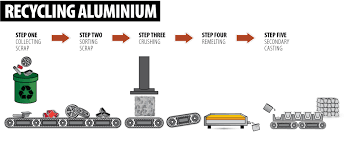
Below is a process for recycling aluminium that a few in the industry have started to incorporate into their services to customers.
ENERGY-EFFICIENT:
The typical process of creating this metal is expensive and requires a significant amount of energy. On the other hand we have the recycling process, which barely requires about 5% of the energy used in the traditional extraction and creation process.
It’s calculated that the amount of energy saved by using this process is enough to power up to 4.4 million European homes. It alone brings a very clear vision on how much energy is saved by using this
As we all know - thanks in part to our ever-increasing knowledge of global warming and the need to reduce carbon omissions - recycling plastic stands for example, use more chemical processes than the below in turn releasing more harmful emissions into the air.
SAVES RESOURCES AND HELPS THE PLANET:
So how does it affect the environment? It was pointed out that recycling cans are the main source of scrap aluminium. Approximately 50% of these cans are recycled every single year totaling 105 million cans a year. Such an enormous quantity would be enough to build approximately 70,000 Boeing 737 airplanes. This gives us a vivid and clear image on how much aluminium is saved.
Even though every year 1.5 million tons of aluminium cans are wasted every single year, this practice of recycling this metal becomes more common and the amount of wasted cans will be reduced in the future. Another great thing about this metal is that it can be recycled over and over again without affecting its quality or composition. That’s why we still use 75% of the aliminium produced since the 1880s.
It also helps the planet by reducing greenhouse gases. This industry produces an important amount of carbon dioxide, which can be reduced if this metal is recycled instead of fabricated from scratch. The smelting of this metal also produces nitrogen oxide and sulfur oxide, two other damaging gases which are part of acid rain and smog.
If you would like our help with collection of your used displays, please contact sales@indigodisplays.co.uk and ask for a quotation for collection.